
Is my baby behind in milestones?
By Ali Day, Paediatric Physiotherapist and mum of two | Author of The Baby Playbook
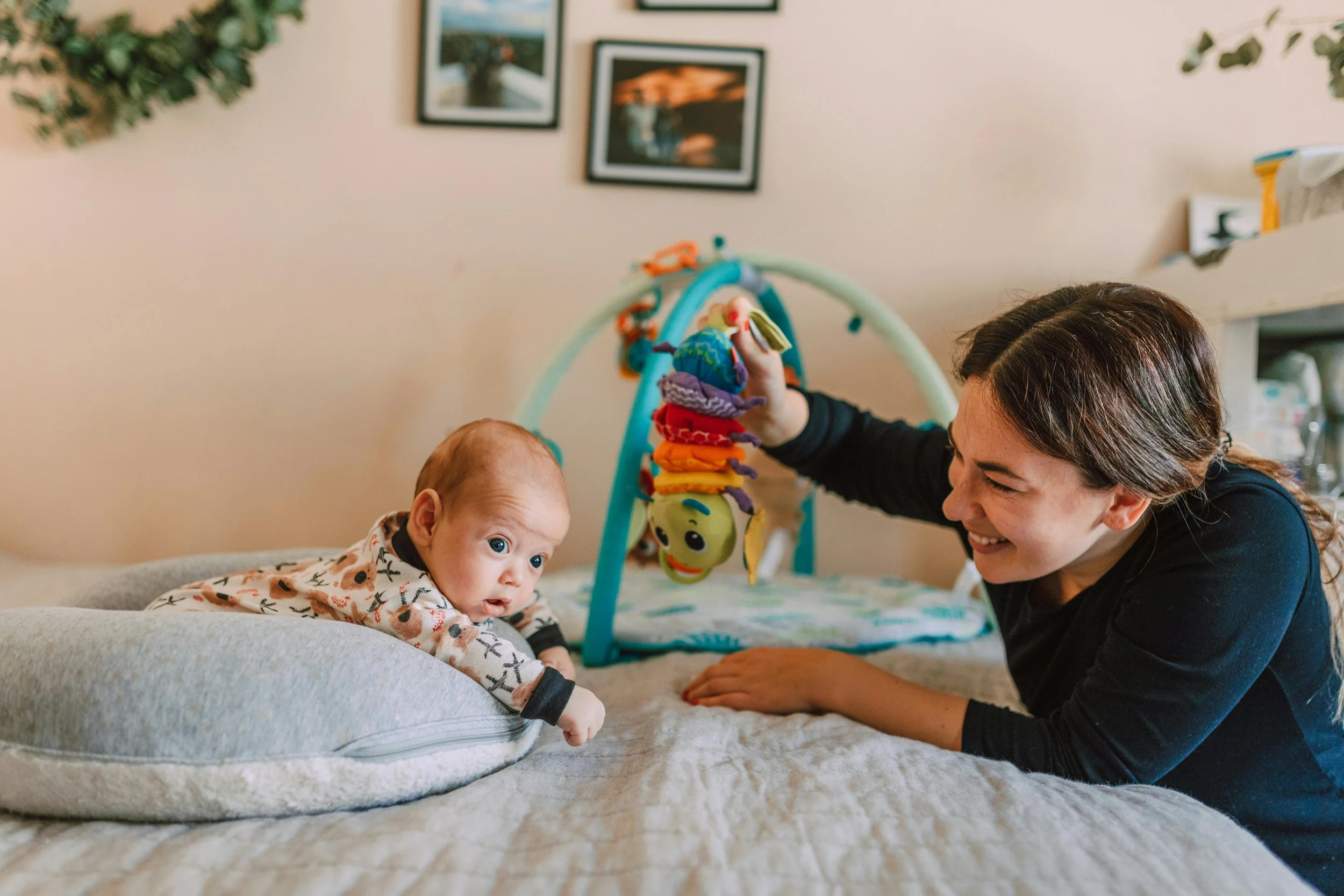
If you’ve ever Googled “is my baby behind?”, you are not alone.
This is one of the most common concerns for new parents.
The most important thing to know is this:
There is a wide range of normal when it comes to baby development.
Milestones are not strict deadlines. They are guides.
If you are wanting a clearer idea of milestone windows and when it might be worth checking in, you can download my free milestone guides which break this down in a simple, reassuring way.
If you are looking for a full step by step plan of what to do at each stage, this is exactly why I created The Baby Playbook (available on Amazon.com here), to take the guesswork out of supporting your baby’s development.
What does “behind” actually mean?
The phrase baby behind in milestones can sound overwhelming, but it is often misunderstood.
Instead of focusing on one milestone, it is more helpful to look at:
Overall movement
Strength and coordination
Progress over time
A baby who is building these foundations is still developing, even if a milestone has not yet appeared.
Why milestone timelines vary
Every baby develops differently.
Variation can be influenced by:
Opportunities for movement and floor time
Time spent in supportive devices
Individual temperament and strength
Research shows that variation within milestone ranges is expected.
What is considered normal?
Most milestones have a range, not a fixed age.
This means a late rolling baby or a baby not sitting yet is not automatically behind.
Often, once the foundations are in place, skills come together quickly.
Signs your baby is progressing
Progress does not always look obvious.
Look for:
Reaching and exploring
Hands coming together
Improved head control
More controlled movement
Baby looking and moving to explore
These are all important building blocks.
How to support development (without pressure)
You do not need complicated routines.
The most effective approach is purposeful play.
Purposeful play means creating simple opportunities for your baby to move and explore throughout the day.
Simple ways to support your baby
Prioritise floor time
Encourage reaching and movement
Use a variety of positions like tummy time and side lying
Limit long periods in containers
Follow your baby’s cues
A calm, engaged baby will always learn more.
When should you check in?
It may be helpful to seek guidance if:
Your baby shows very limited movement
There is a strong preference to one side
Skills are not progressing over time (4-6 weeks or more)
You feel unsure or concerned
Your gut instinct tells you
Checking in early is about reassurance and support, not doing anything wrong.
A gentle reminder
It is very easy to compare your baby to others, especially online.
But development is not a race.
Small, consistent opportunities to move and explore matter far more than hitting a milestone by a certain age.
Frequently asked questions
Is it normal for my baby to be behind in milestones?
Most of the time, what feels like being behind is actually normal variation.
Should I worry if my baby is not sitting yet?
Not necessarily. Sitting develops gradually and depends on strength and coordination. Using data from the Alberta Infant Motor Scale (AIMS) independent sitting is achieved by 50-90% of babies between 6.5-8 months old but it is important to look for the mini skills your baby might be doing that could indicate they are close to sitting. These can be found in The Baby Playbook (also available on Amazon.com).
What is the best way to support development?
Through purposeful play, giving your baby opportunities to move, explore and build strength.
When should I seek help?
If you are unsure, noticing limited movement, or have concerns, it is always okay to check in.
Want more support?
If you are wanting clear, simple guidance without the overwhelm, The Baby Playbook (also available on Amazon.com) walks you through exactly how to support each stage using purposeful play.
For more practical ideas you can use in your everyday routine, you can also follow along on
Instagram where I provide little tips and tricks for baby bonding, cuddling and play!
Final thoughts
If your baby is not doing what you expected yet, it does not mean they are behind.
Focus on opportunities, not pressure.
Development happens in small moments, over time.
Disclaimer: This page is intended to be educational and informative only and should not be taken as, or replace, individual medical advice. This should act as a guide only. Always consult with a healthcare professional for accurate diagnosis and personalised treatment if you have any concerns with your little one.
Every child is unique and should be assessed individually.